

Conversion Rate Optimization, commonly known as CRO, is the process of improving a website so that more visitors complete a desired action.
That action could be making a purchase, submitting a contact form, signing up for a newsletter, booking an appointment, requesting a quote, or downloading a resource.
Getting visitors to your website is important, but traffic alone does not guarantee business results. If thousands of people visit your website but very few take action, there is an opportunity to improve the website experience.
This is where conversion rate optimization becomes important.
A good CRO strategy focuses on understanding what visitors want, identifying barriers that prevent them from taking action, and improving the website based on data rather than assumptions.
What Is Conversion Rate Optimization?
Conversion Rate Optimization is the process of increasing the percentage of website visitors who complete a desired conversion.
For example, suppose your website receives 1,000 visitors and 20 people submit your enquiry form.
Your conversion rate would be:
20 ÷ 1,000 × 100 = 2%
If you improve your website and 40 visitors submit the form from the same 1,000 visitors, your conversion rate becomes 4%.
You have doubled your conversions without necessarily doubling your traffic.
This is why conversion rate optimization is an important part of digital marketing.
Why Conversion Rate Optimization Matters
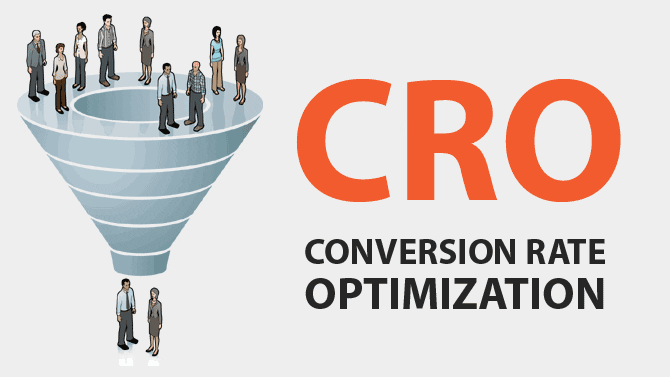
Many businesses focus heavily on getting more website traffic.
SEO, social media, advertising, and content marketing can all help bring visitors to your website.
But if the website doesn’t convince visitors to take the next step, some of that traffic may be wasted.
CRO helps you make better use of the traffic you already have.
For example, improving your website conversion rate can potentially help you generate more:
- Leads
- Sales
- Enquiries
- Sign-ups
- Bookings
- Downloads
The exact conversion depends on the purpose of your website.
How to Calculate Conversion Rate
The basic conversion rate formula is:
Conversion Rate = Conversions ÷ Total Visitors × 100
For example:
Your website receives 5,000 visitors.
You receive 100 enquiries.
Your conversion rate is:
100 ÷ 5,000 × 100 = 2%
However, the way you measure conversion rate should match your business objective.
A website selling products may measure purchases, while a service business may measure qualified leads or enquiries.
Understand Your Website Visitors
Successful conversion rate optimization starts with understanding your audience.
Before changing your website, ask:
Who is visiting?
What are they looking for?
What problem are they trying to solve?
What action do you want them to take?
What could stop them from taking that action?
For example, someone visiting an SEO agency website may want to know:
- What services are offered?
- How much does SEO cost?
- Does the agency have relevant experience?
- How can they contact the business?
- What results can they expect?
If your website doesn’t answer these questions clearly, visitors may leave before converting.
Create a Clear Value Proposition
Your website should quickly communicate why someone should choose your product, service, or business.
This is your value proposition.
Instead of using a vague headline such as:
We help businesses grow.
A more specific message could be:
SEO Strategies That Help Small Businesses Build Sustainable Search Visibility.
The second message gives visitors a clearer idea of what the business offers.
A strong value proposition can help visitors understand the benefit of your offering without having to search through the entire website.
Improve Your Website Call to Action
A call to action, or CTA, tells visitors what they should do next.
Examples include:
Get a Free Consultation
Request a Quote
Start Your Free Trial
Contact Us
Download the Guide
A CTA should be clear and relevant to the page.
If a visitor reaches your service page and wants to contact you, make the next step obvious.
Don’t make users search through multiple pages just to find your contact option.
Simplify Your Forms
Long or complicated forms can create unnecessary friction.
If you only need a visitor’s name, email address, and message, don’t necessarily ask for ten additional pieces of information.
The right form length depends on the purpose of your business and the information you need to qualify leads.
The principle is simple:
Ask for the information you actually need.
A shorter and clearer form can make it easier for visitors to complete the conversion.
Improve Website Speed
Website performance can influence the user experience.
If pages take too long to load, visitors may leave before interacting with your content.
This is particularly important for mobile users.
You can improve website performance by optimizing images, reducing unnecessary scripts, using efficient hosting, and addressing technical performance issues.
Website speed is also connected to Core Web Vitals, which will be covered in your next article in this series.
Make Your Website Mobile-Friendly
A large amount of web browsing happens on mobile devices.
Your website should therefore work properly across different screen sizes.
Check whether:
- Text is easy to read
- Buttons are easy to tap
- Forms work correctly
- Images fit the screen
- Navigation is easy to use
- Important information is visible without excessive scrolling
A visitor shouldn’t have to zoom in or struggle with tiny buttons to complete an action.
Build Trust Before Asking for a Conversion
Visitors may hesitate to contact or purchase from a business they don’t trust.
Your website can reduce uncertainty by providing genuine information such as:
- Customer reviews
- Testimonials
- Case studies
- Portfolio examples
- Business information
- Contact details
- Clear policies
- Relevant credentials
The type of trust signal you use should depend on your business.
For example, a digital marketing agency could showcase case studies and portfolio work, while an ecommerce business might emphasize product reviews and clear return information.
Use Analytics to Find Conversion Problems
Conversion rate optimization should be based on evidence whenever possible.
Analytics can help you understand where visitors enter your website, which pages they view, and where they leave.
For example, imagine this journey:
Landing page → Services page → Contact page → Form
If many visitors reach the contact page but very few submit the form, the form or page experience may deserve closer examination.
This doesn’t automatically tell you what the problem is, but it gives you a place to investigate.
A/B Testing for Conversion Rate Optimization
A/B testing involves comparing different versions of a page or element to determine which performs better.
For example, you could test two different headlines:
Version A:
Grow Your Business Online
Version B:
Get More Customers Through SEO
You could then compare their performance under a properly designed experiment.
A/B testing should be based on a clear hypothesis rather than changing random elements without a reason.
Don’t Optimize for Conversions at Any Cost
A higher conversion rate isn’t always better if the conversions aren’t valuable.
For example, imagine changing your website to encourage thousands of people to submit a form, but most of those enquiries are irrelevant.
Your conversion rate may increase while the quality of leads decreases.
Good conversion rate optimization should focus on valuable conversions, not just increasing a number.
For a business, a smaller number of qualified leads can be more valuable than a large number of low-quality enquiries.
Common Conversion Rate Optimization Mistakes
Changing Everything at Once
If you change your headline, CTA, images, form, layout, and pricing simultaneously, it becomes difficult to understand what caused the change in performance.
Copying Competitors
A design that works for another company may not work for your audience.
Focusing Only on Design
A visually attractive website isn’t automatically a high-converting website.
Ignoring Mobile Users
A page that works on desktop may still provide a poor mobile experience.
Using Misleading CTAs
Your CTA should accurately describe what happens when someone clicks it.
Measuring Only Traffic
More traffic doesn’t necessarily mean more customers.
Conversion Rate Optimization and SEO
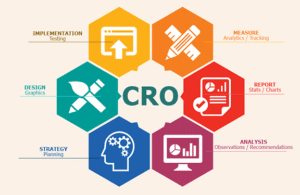
SEO and conversion rate optimization work well together.
SEO helps bring relevant visitors to your website.
CRO focuses on what happens after those visitors arrive.
For example:
SEO → More relevant traffic
CRO → More visitors taking valuable actions
This means you shouldn’t optimize your website only for search engines.
The content, navigation, design, and calls to action should also help real visitors accomplish what they came to your website to do.
Final Thoughts
Conversion Rate Optimization is about making your website more effective at turning relevant visitors into valuable customers, leads, or subscribers.
Instead of assuming that more traffic automatically solves a business problem, look at what happens after visitors arrive.
Understand your audience, communicate your value clearly, improve your calls to action, simplify important journeys, build trust, improve website performance, and use data to identify opportunities.
The best conversion rate optimization strategy isn’t about forcing visitors to convert.
It’s about making it easier for the right visitors to find the information they need and take the next step with confidence.